The Civilization you could play against people
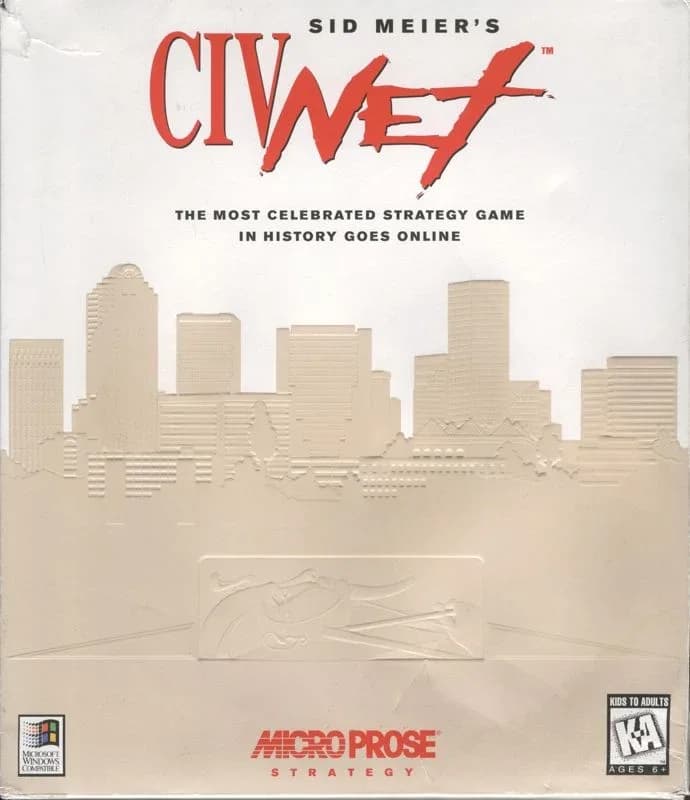
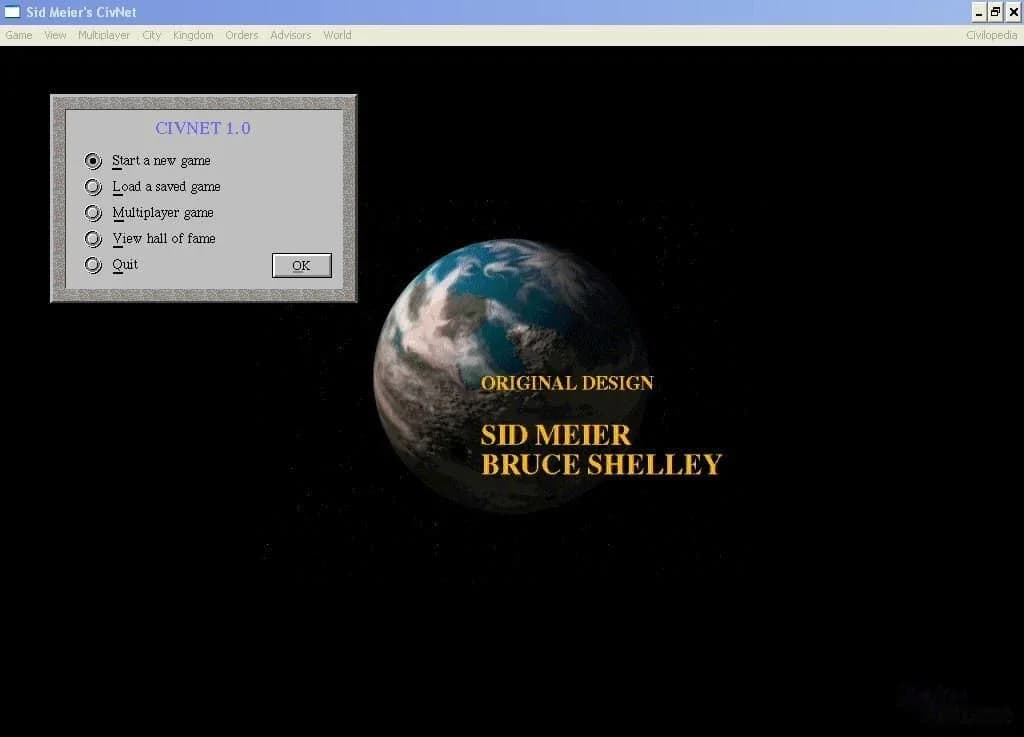
Sid Meier's CivNet was released by MicroProse in 1995 and answered the one complaint the 1991 original could not: there was nobody else in the world. Civilization had shipped as a single-player game because, in 1991, home networking barely existed. Four years later LANs and dial-up were ordinary, and CivNet rebuilt the original so that up to seven human players could share one map, with computer-run civilizations taking any seats left empty.
The rules are the 1991 game's. The same civilizations and leaders, the same 4000 BC start, the same technology tree, the same 21 wonders and the same two ways to win. What changes is who is on the other end of a peace treaty — a diplomacy model built to be read by an AI behaves very differently when a friend is reading it instead.
How CivNet's multiplayer works
- Two ways to take a turn
- classic turn-by-turn, or a simultaneous mode where everyone moves at once and the year advances only when every player has confirmed they are finished. Simultaneous play is what makes a seven-player game finishable in an evening.
- Five ways to connect
- local network, an early form of internet play, modem, a direct serial cable between two machines, and hotseat on a single keyboard.
- Mixed tables
- AI civilizations fill the seats humans do not take, so even a two-player game is a crowded world with barbarians and rivals of its own.
- A Windows-era front end
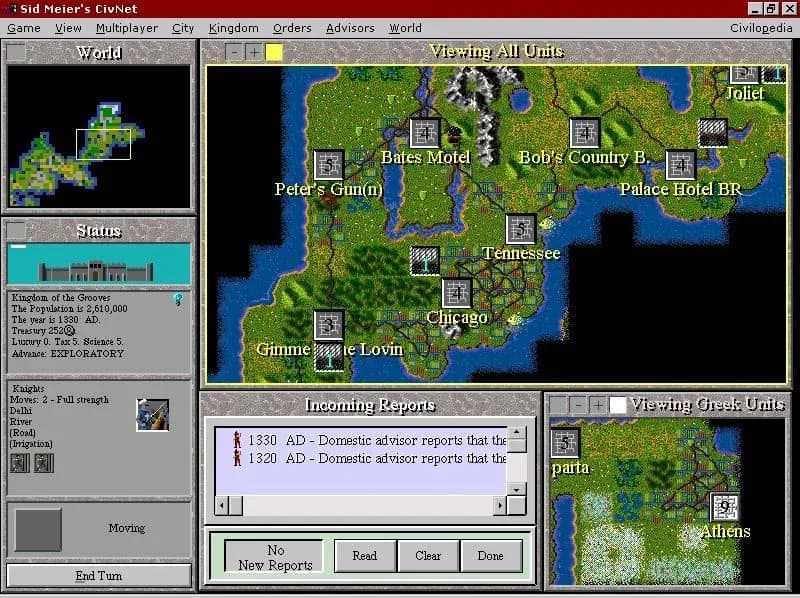
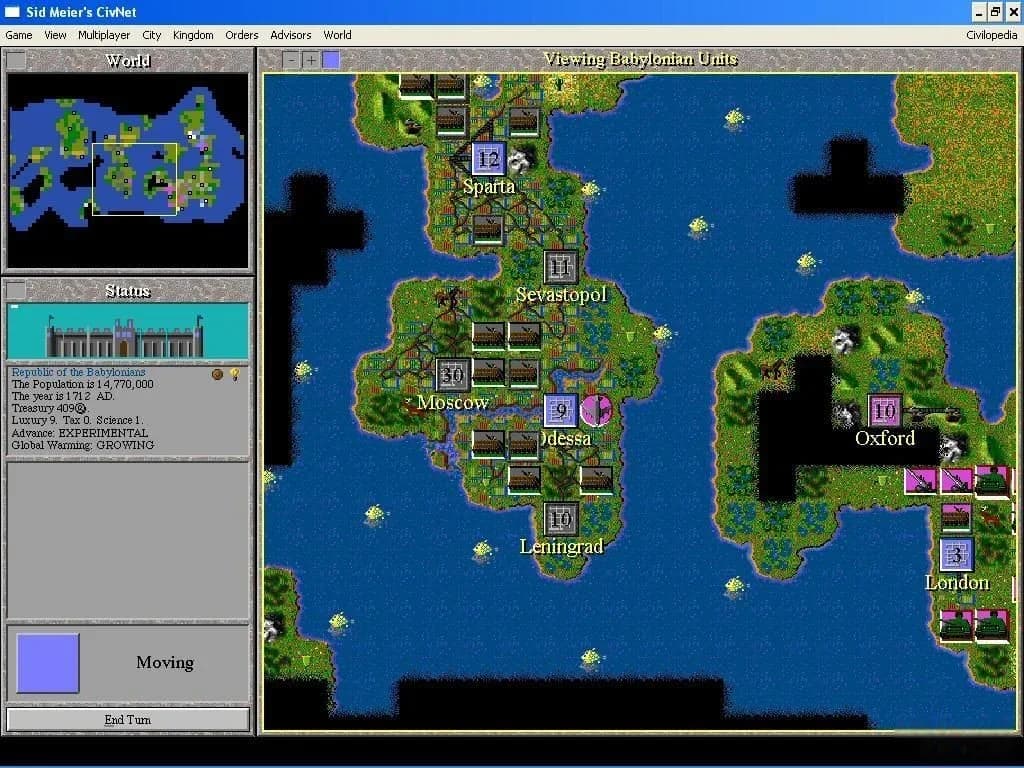
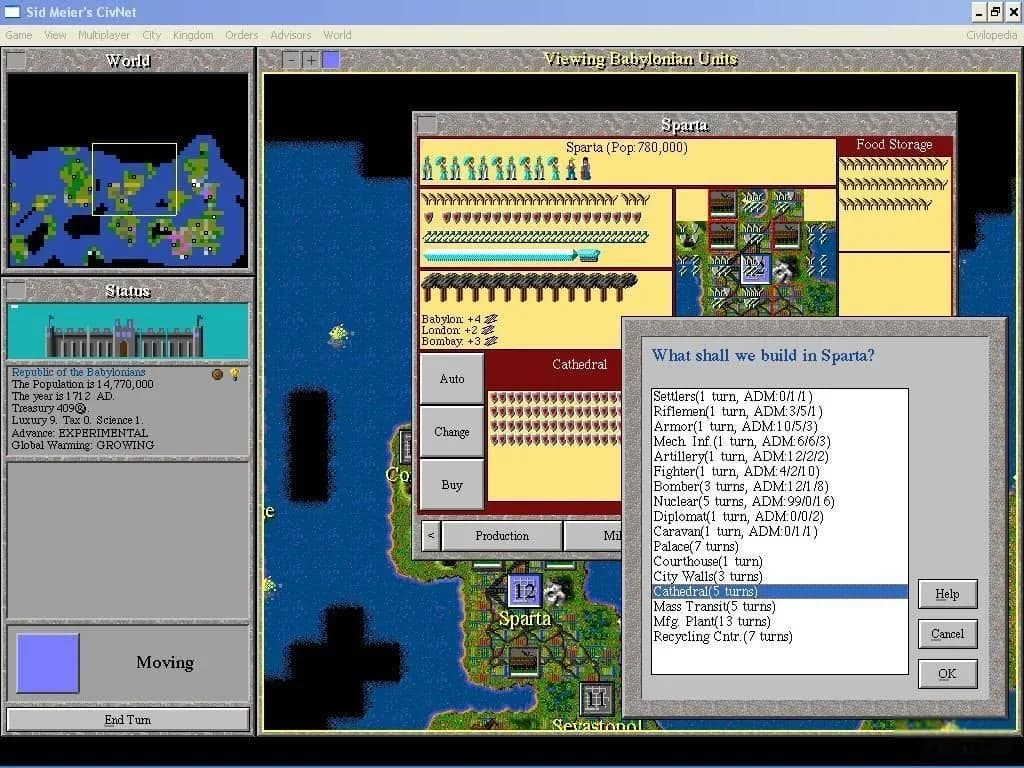
- CivNet brought proper Windows 3.1 and Windows 95 support to a design that had grown up under DOS.
The map editor and the King Builder
Two tools shipped with CivNet that the original never had. The map editor lets you draw a world tile by tile rather than accept whatever the generator produced — the ancestor of every scenario editor the series has had since, and the feature Fantastic Worlds would turn into a whole community two years later.
The King Builder is the stranger one: it lets you name your civilization and design how your leader appears to everyone else at the table. In a game where the other rulers are now people, deciding what they see when they open negotiations stops being decoration.
The most interesting near-miss in the series
MicroProse expected CivNet to be its important release of the year. According to Brian Reynolds, the company "sincerely believed that CivNet was going to be a much more important product" than the quiet single-player sequel he and Jeff Briggs had started — and because that project was seen as a low-risk side effort, its team was left alone to experiment.
The game everybody was watching got overshadowed by the game nobody was.CivNet, 1995 — and Civilization II, 1996
Civilization II arrived the following year and buried it. CivNet became a footnote almost immediately — but it is the footnote where the series first tried to be social, three years before Multiplayer Gold Edition made multiplayer Civ stick for good.
CivNet, Civilization for Windows, and the original
Three things carry similar names and are easy to confuse. The 1991 MS-DOS original is the game itself. Civilization for Windows (1993) is a faithful single-player port of it. CivNet (1995) is a remake built around multiplayer, with the editors and the Windows 95 support that the port never had.
Playing CivNet today
Play Sid Meier's CivNet in your browser — nothing to install, with save states kept locally and synced to your account when you sign in. Modern network play is a museum piece rather than a feature, but hotseat still works exactly as it did, and the single-player game is the 1991 classic in full. For unit statistics, research order and wonder strategy, the Civilization I encyclopedia covers CivNet completely.