The engine's last ride
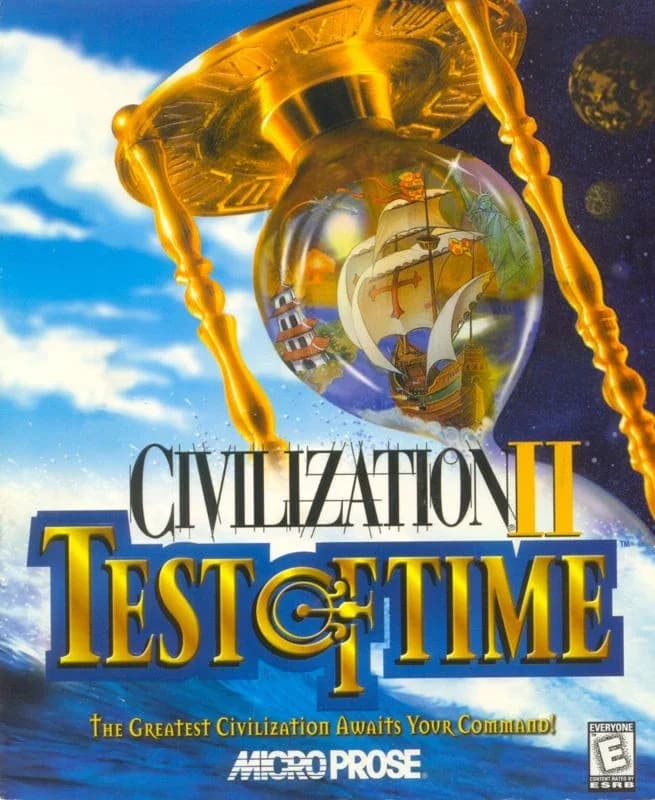
Civilization II: Test of Time (August 1999, Hasbro Interactive under the MicroProse label — and no "Sid Meier's" on the box) rebuilt the Civ II engine one final time around a single big idea: a game no longer has to happen on one map. Campaigns stack up to four interlinked worlds, connected by special transports and gateways — so your rival may be massing armies on the far side of a portal, in the sky above you, or on another planet entirely.
Built at MicroProse's historic Hunt Valley studio by Civ II-lineage staff (designers John Possidente and Mick Uhl, lead programmer Stephen L. Cox), it was the series' answer to a crowded 1999: Alpha Centauri on one flank, Activision's Civilization: Call to Power on the other.
Four games in one
- Original
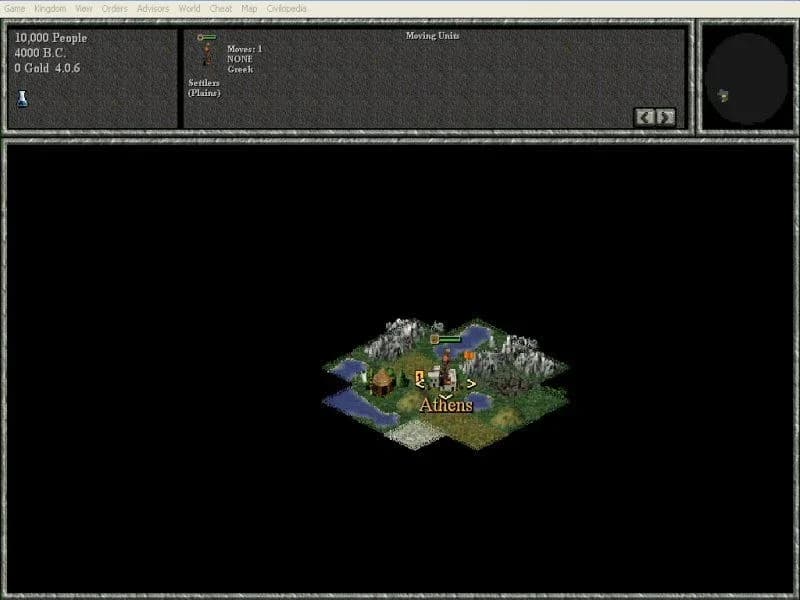
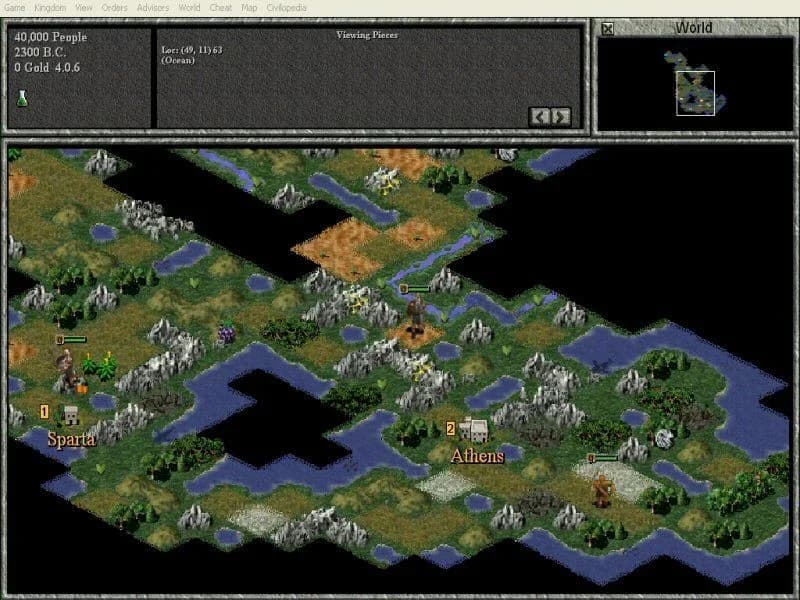
- classic Civ II rules with fully animated units and redrawn art, on a single map.
- Extended Original
- reaching Alpha Centauri no longer ends the game: a second living world opens, complete with its own tech tree and a pre-developed alien civilization to displace, ending in conquest or Transcendence.
- Fantasy
- a Midgard-style realm of up to four planes (surface, underworld, sky and sea) fought over by seven races: Elves, Merfolk, Goblins, undead Stygians, bird-like Buteo, Humans and the nomadic Infidels. Win by conquest, by raising the Siege Engine, or by discovering Bifrost and summoning the gods.
- Science Fiction
- humans crash-land in the (real) Lalande 21185 system and spread across the planet Funestis, its ancient orbital platforms, rocky Naumachia and the gas giant Nona. Win by getting word home, building a quantum gate to Earth — or taking the system.
The fantasy mode grew straight out of the Midgard scenario from Fantastic Worlds, and a scripted Midgard scenario ships in the box alongside the open campaigns.
What was gained, what was lost
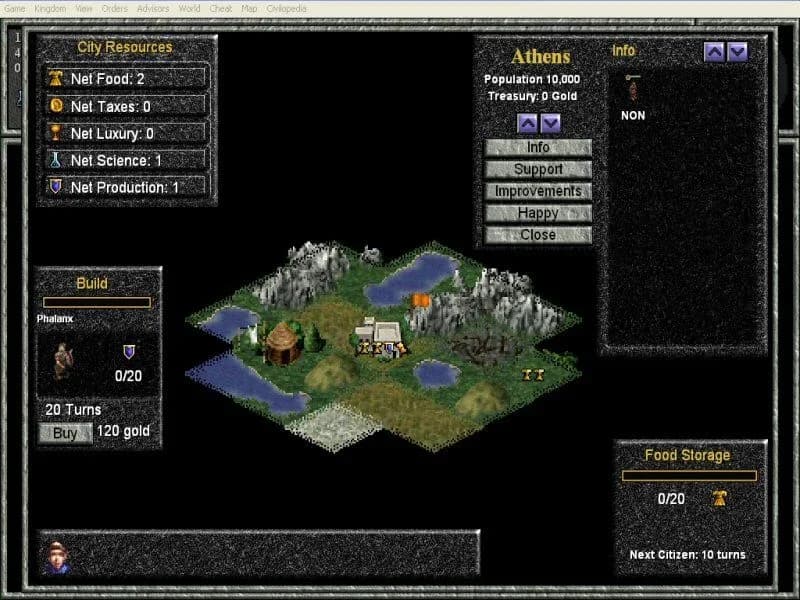
Test of Time added a 16-bit-color graphics engine, animated everything — units walk, fight and die in motion; fish swim, buffalo graze — and seriously upgraded the scenario toolkit (more unit slots, per-civilization tech restrictions, a stronger events language). But it also cut beloved furniture: the FMV High Council, the wonder movies, the throne room and the built-in editors are all gone, old saves don't load, and the darker redrawn art was divisive from day one. Reviewers split right down that fault line: IGN's 7.8 found "much stronger" AI and praised the multi-map ambition, while GameSpot's notorious 4.2 saw "Civilization II with absolutely nothing new" wrapped in renamed tech trees. NextGen's verdict aged best: "Maybe it's time to say, 'Okay, enough of a good thing. Bring on Civilization III.'"
The redemption arc
History has been kinder than 1999 was. Test of Time turned out to be the last Civilization on the classic engine — the series moved to Firaxis for Civilization III — and decades later the fan-made Test of Time Patch Project (64-bit compatibility, Lua scripting, dozens of fixes) quietly made it the preferred engine of the entire Civ II modding community. The most-panned release in the classic line became its longest-lived platform.
Playing Test of Time today
Play Civilization II: Test of Time in your browser — all four campaigns under emulation, with save states synced to your account. The Civilization II encyclopedia covers the classic rules underneath it all: units, technologies and wonders.