The game that started it all
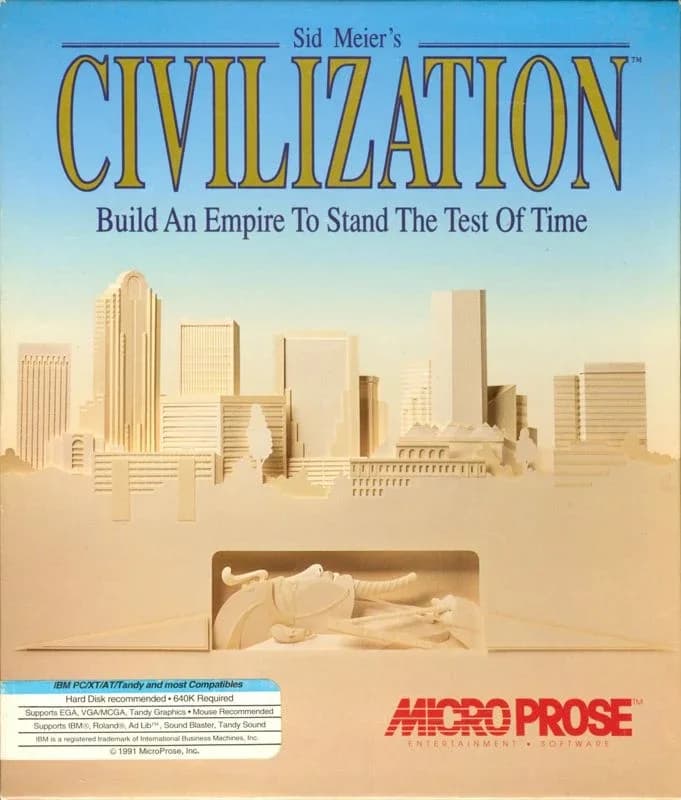
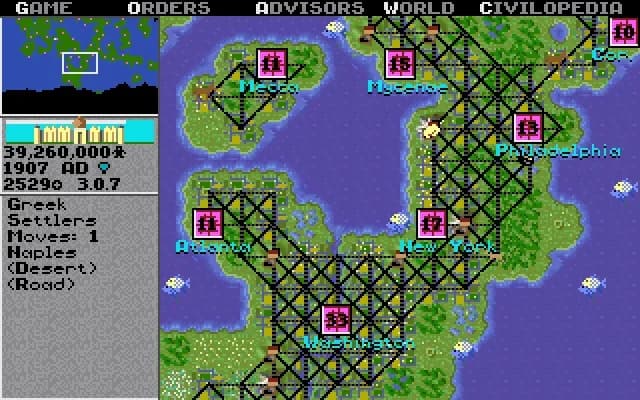
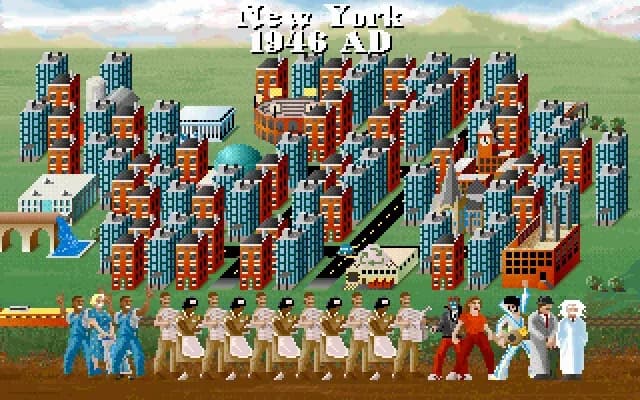
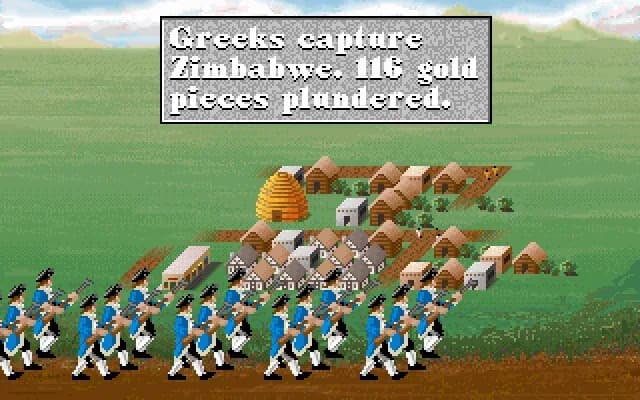
Sid Meier's Civilization was released by MicroProse in September 1991, and it asked a question no computer game had asked at that scale before: can you guide an entire people from 4000 BC to the space age? You found cities, explore a procedurally generated world, research technologies, change governments, raise Wonders of the World and negotiate — or go to war — with rival civilizations. The game ends when you conquer the world, land a colony ship on Alpha Centauri, or run out of history.
It wasn't the first grand strategy game, but it was the first to make the whole of human history feel like a single, playable arc — and the reason the phrase "one more turn" entered the gaming vocabulary.
How Sid Meier's Civilization plays
Civilization is turn-based and built from a handful of interlocking systems, each simple on its own:
- Cities
- Settlers found cities that work the surrounding tiles for food, production and trade across a 80×50 world of twelve terrain types.
- Technology
- 67 researchable advances, from Alphabet and Pottery all the way to Fusion Power; every choice opens new units, buildings and governments.
- Government
- Despotism, Monarchy, Republic, Democracy, Anarchy and Communism each reshape your economy, your happiness and your wars.
- Wonders
- 21 one-of-a-kind projects, from the Pyramids to the Apollo Program, each with empire-changing powers.
- Diplomacy & war
- fourteen civilizations from Caesar's Rome to Shaka's Zulus (up to seven in one game), led by a famously opinionated set of AI personalities.
- Difficulty
- five levels from Chieftain to Emperor, ending between 2100 and 2020 AD depending on how hard you like your history.
Development: two people and a floppy disk
Civilization was designed by Sid Meier with Bruce Shelley at MicroProse, and for most of its life the team was essentially the two of them — Meier coding and designing, Shelley playtesting, producing and writing the Civilopedia. Meier later estimated the whole game cost about $170,000 to make.
The designers have always been open about their influences: the board game Civilization (whose name MicroProse licensed from Avalon Hill late in development), the wargame Empire, SimCity, Populous and Meier's own Railroad Tycoon. The first prototype was a real-time simulation with SimCity-style zoning; after a detour to finish Covert Action, Meier threw it out and rebuilt the game turn-based, replacing zones with Settler units. Less than a month before release he cut the map size in half — "double it, or cut it in half" remains one of his most-quoted design rules.
A game is a series of interesting decisions.
Sid Meier — the design philosophy Civilization made famous
Reception and legacy
Computer Gaming World's December 1991 review called Civilization "a new Olympian in the genre of god games," and the magazine went on to crown it Overall Game of the Year in 1992, induct it into its Hall of Fame in 1993, and rank it #1 of the 150 Best Games of All Time in 1996. It won the Origins Award for Best Military or Strategy Computer Game of 1991, sold roughly 850,000 copies by the time Civilization II arrived and about 1.5 million lifetime, and in 2022 entered the World Video Game Hall of Fame.
Civilization codified what later became known as the 4X genre — explore, expand, exploit, exterminate — and its DNA is in every strategy game that lets you steer a society through time. Its direct line runs through Colonization, CivNet, Civilization II, Alpha Centauri and every numbered Civ since. One myth worth retiring, though: the famous "Nuclear Gandhi" overflow bug does not exist in this game — both Meier and Brian Reynolds have confirmed the story was invented decades later. India's leader is exactly as peaceful as his aggression rating says. A Phalanx occasionally repelling a Battleship, on the other hand, is a real and beloved quirk.
Versions and ports
- MS-DOS
- the September 1991 original in 16-color EGA or 256-color VGA; the version emulated here.
- Amiga (1992) & Atari ST (1993)
- ports with reworked audio and palettes.
- Macintosh and Windows 3.x
- desktop ports of 1993.
- PC-98 (1992), SNES (1994/95)
- Japanese computer and console editions; the SNES version swaps the Zulus for Tokugawa's Japanese and supports the SNES Mouse.
- CivNet (1995)
- the Windows remake with multiplayer for up to seven, including a true simultaneous-turn mode.
Playing Sid Meier's Civilization today
You can play Sid Meier's Civilization free in your browser right here — the original MS-DOS version under emulation, with save states that sync to your account. New to the ancient world? The Civilization I encyclopedia covers all fourteen civilizations, 28 units, the full technology tree and every Wonder of the World.