1492, and everything after
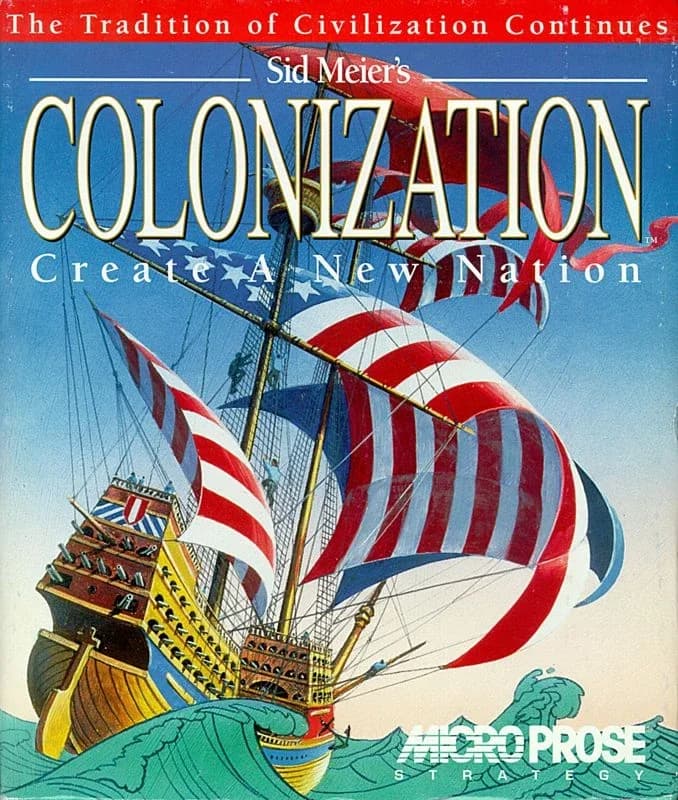
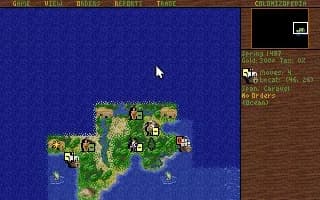
Sid Meier's Colonization, released by MicroProse in 1994, begins where most strategy games end their ancient era: a single ship heading west into the unknown. As England, France, Spain or the Netherlands, you build colonies in the New World between 1492 and 1850 — but the goal is not to outlast history. It is to build something prosperous and free-minded enough to declare independence from your own king, then survive the Royal Expeditionary Force he sends to take it back.
Where Civilization is a mile wide, Colonization is a mile deep: one era, four powers, and an economy you can feel in your hands.
How Colonization plays
- Colonies
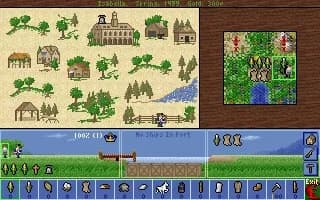
- every settlement is a working economy; each colonist farms, fishes, mines or staffs a building, and any of them can become one of 22 expert specialists.
- The goods chain
- sixteen goods, half raw and half manufactured: sugar becomes rum, tobacco cigars, cotton cloth, furs coats; ore becomes tools, and tools become muskets. Lumber turns into the hammers that build everything else.
- The European market
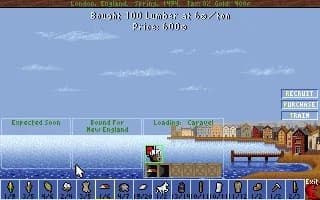
- ship goods home for gold at prices that genuinely move with supply. Flood the market with rum and watch the bottom fall out.
- Native nations
- eight peoples, from the semi-nomadic Sioux and Apache to the Aztec and Inca empires; trade with them, learn skills in their villages, ally with them — or dispossess them, with consequences.
- Liberty & revolution
- statesmen generate liberty bells that recruit 25 Founding Fathers (five each across Trade, Exploration, Military, Political and Religious tracks) and swell the Sons of Liberty.
- The War of Independence
- once rebel sentiment passes 50% you can declare; then the King's Men-O-War, regulars and artillery arrive, and the endgame begins.
Development
Colonization was designed by Brian Reynolds together with Sid Meier — Reynolds' first major design credit (he programmed it too, with Jeff Briggs and Douglas Kaufman also credited on design). Reynolds has been careful to call it a sibling rather than a sequel: it "wasn't really a sequel but clearly borrowed Civ elements." The project earned him the chair on Civilization II, which makes Colonization the proving ground for the most celebrated strategy sequel of the 90s.
A cross between Civilization and Railroad Tycoon.
Computer Gaming World, December 1994 — on Colonization's dream pedigree
Reception and legacy
The era's press liked it with caveats: PC Gamer US scored it 85%, Next Generation gave it four stars out of five and praised how it "borrowed heavily from classic hits of the past to create a surprisingly addictive title with a flavor all its own," while Computer Gaming World's 3.5/5 review needled the late-game grind ("The Road To Freedom Is Paved With Tedium"). It sold a solid 350,000+ copies by 1997, made Amiga Power's all-time top five, and its economic engine remains one of the most admired in strategy gaming.
Two debates have followed it ever since: the deliberate omission of slavery (the economy runs on free colonists, indentured servants and petty criminals), and the absence of Portugal. Its ideas live on in the open-source FreeCol remake (in continuous development since 2003) and in Firaxis' official return, Civilization IV: Colonization (2008).
Versions and ports
- MS-DOS
- the 1994 original, the version emulated here, with a map editor in the box.
- Windows 3.1 (May 1995)
- CD-ROM port with a mouse-first desktop UI.
- Amiga (May 1995) & Macintosh (1995)
- the last wave of ports; a "Colonization Gold" with video sequences was built but never released.
Playing Sid Meier's Colonization today
Play Sid Meier's Colonization free in your browser — the original DOS release, with synced save states so your revolution survives a device change. The Colonization encyclopedia details the four European powers, every colonist and unit, the full goods economy and all 25 Founding Fathers.