The same legend, on the desktop
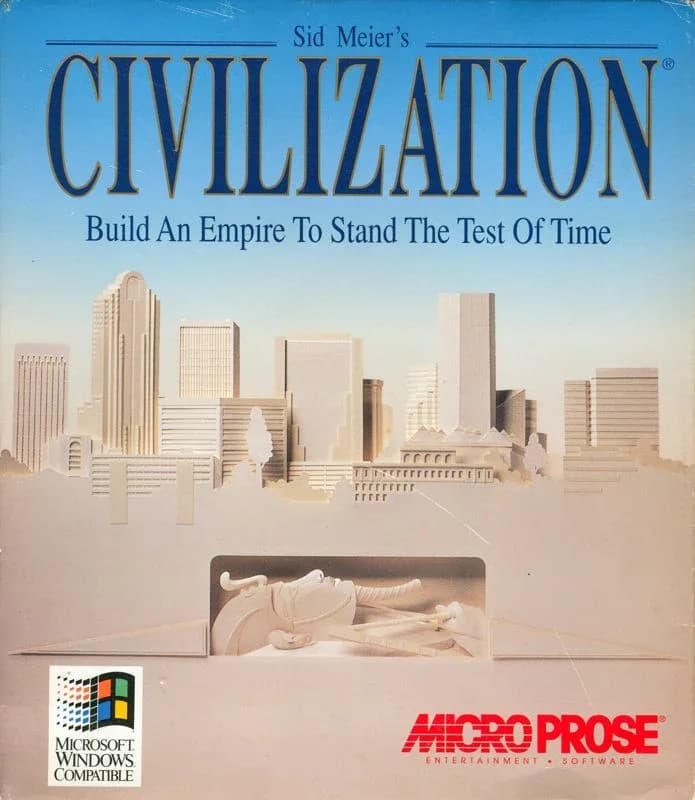
Sid Meier's Civilization for Windows is MicroProse's late-1993 port of the 1991 classic to Windows 3.x — the same fourteen civilizations, 21 wonders and Alpha Centauri space race, rebuilt as a native Windows application. The rules didn't change; everything around them did. The official help file put it plainly: the menus and commands are the same — but now they live in a real windowed GUI you could alt-tab away from when your boss walked past.
What's different from the DOS original
- Native Windows GUI
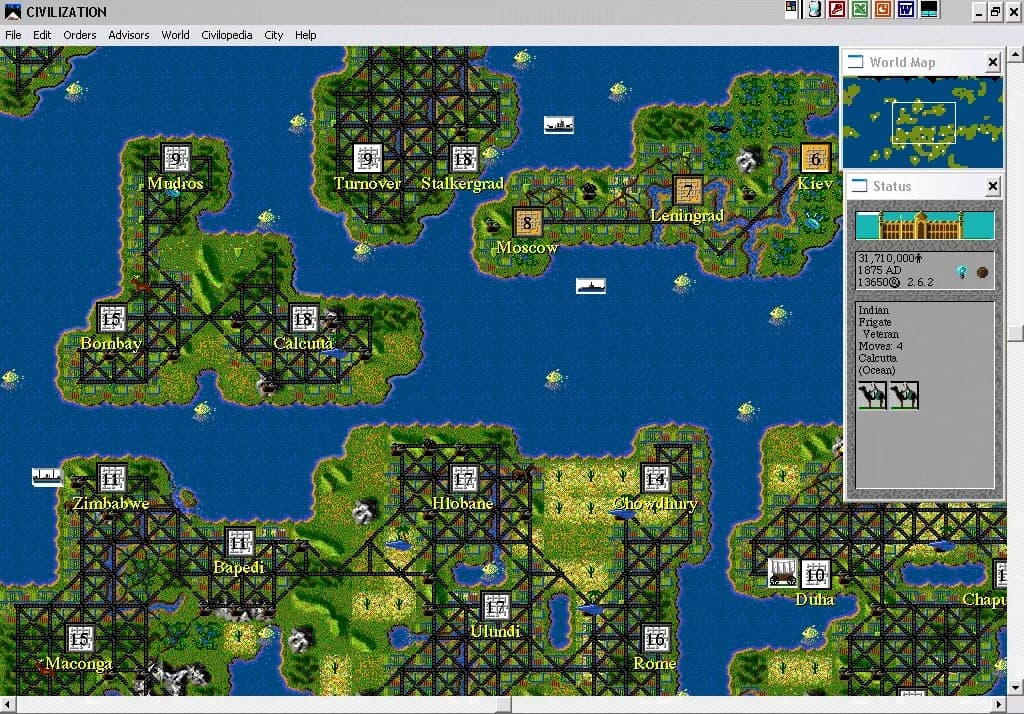
- a menu bar (File, Edit, City, Help), dialog-driven screens, keyboard shortcuts listed beside every command, and Windows online help.
- Three-window layout
- the map, a status panel (with palace miniature, research bulb and a pollution "sun") and the world map are separate, resizable child windows; hide them to give the map room.
- Brighter 256-color art
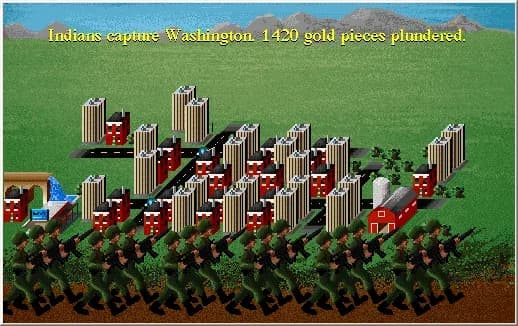
- redrawn for 640×480 VGA and Windows palettes. On a 16-color desktop the installer ran a one-time artwork conversion that could take anywhere from twenty minutes to two hours — a genuine period experience.
- Digitized sound
- WAV effects and fourteen leader-specific audio heralds through Windows sound drivers, replacing the DOS version's synth music.
- Identical game underneath
- same 80×50 world, same 67 advances, same six governments. Every strategy (and the whole Civ I wiki) applies 1:1.
One thing it did not add is mouse support — the DOS original was already fully mouse-driven. And "CivWin," the name the community still uses, was never the official title; the box said Sid Meier's Civilization for Windows.
A quiet release with a loud afterlife
Shipped on four floppies for Windows 3.1 (a 386SX and 4 MB of RAM sufficed), the Windows port drew few standalone reviews — but in 1994 PC Gamer UK ranked this release the 6th best computer game of all time, calling Civilization "Sid Meier's crowning glory." A final 1.2 patch settled it into the shape preserved today. As a well-behaved 16-bit Windows app it kept running on 32-bit Windows for decades, which made it many players' long-term way back into Civ I.
Don't confuse it with CivNet
Two years later MicroProse shipped CivNet (1995), a separate Windows remake of Civilization with multiplayer over LAN, modem and the early internet. Civilization for Windows is the faithful single-player port; CivNet is the social experiment. Between them sits the future: the Windows-native direction led straight to Civilization II, which skipped DOS entirely.
Playing Civilization for Windows today
Play Sid Meier's Civilization for Windows in your browser — emulated Windows 3.x, no setup, with save states synced to your account. For unit stats, tech paths and wonder strategy, the Civilization I encyclopedia covers this version completely: civilizations & leaders, all 28 units, the technology tree and the 21 wonders.