Civ II drops the history textbook
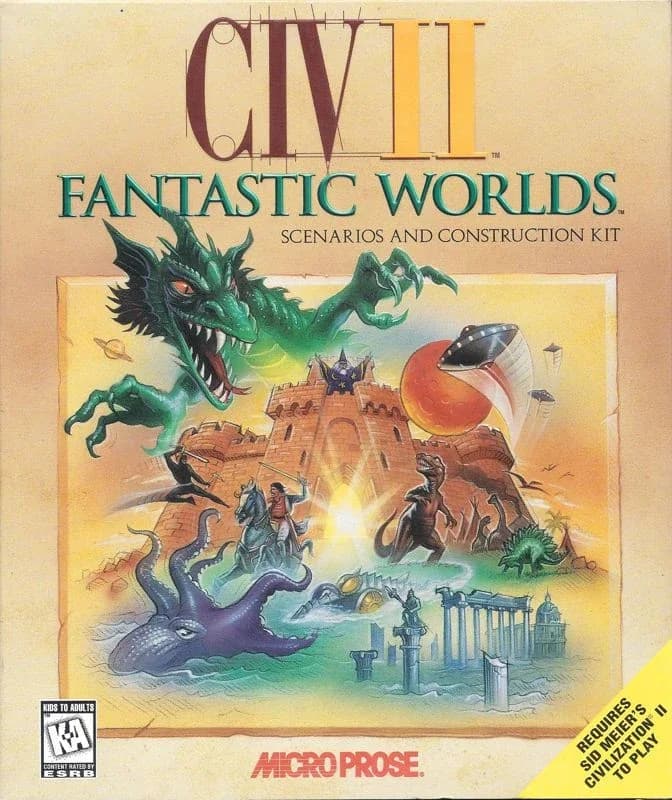
Civilization II: Fantastic Worlds (sold in North America as Civ II: Fantastic Worlds) shipped on November 11, 1997, and took the engine somewhere the series had never been: off Earth and out of the history books entirely. Its nineteen scenarios — eleven in-house, eight more from the community's "Best of the Net" — colonize Mars, wage war through a four-way fantasy realm, chase Jules Verne, and cross over into MicroProse's own legends: X-COM, Master of Orion and Master of Magic.
Nineteen worlds in one box
- Alternate histories
- The New World (Europeans never reach the Americas; play the native nations) and Samurai (Japan without Western intervention), both by Mick Uhl.
- Myth and adventure
- Atlantis, The World of Jules Verne, and The Mythical History of Midgard, the elves-goblins-and-mermen fantasy that later seeded Test of Time.
- Science fiction
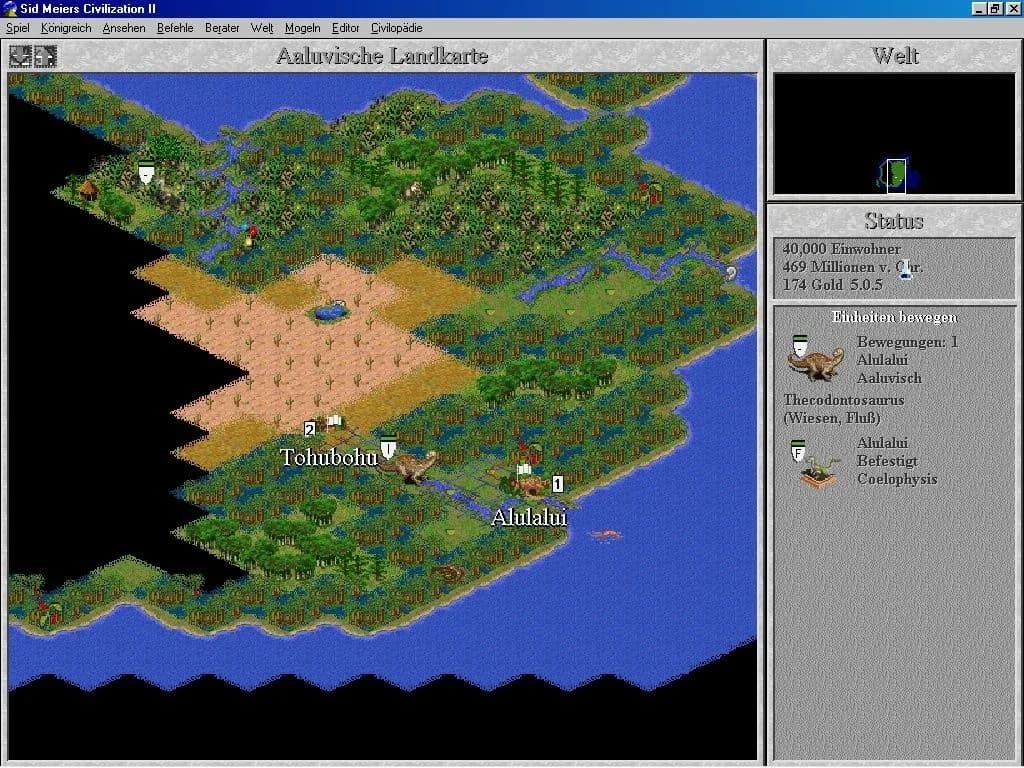
- Mars Now! (terraform the Red Planet), The Age of Reptiles (rival dinosaur tribes), Ice Planet, and X-COM: Assault on Phobos.
- The "Junior" crossovers
- Masters of Orion Jr. and Masters of Magic Jr., Civ II miniatures of MicroProse's other strategy royalty.
- Best of the Net
- eight credited fan scenarios, from Battle of the Sexes to USA2010, Paradise and Mammoth.
(One persistent internet myth: there is no ToeJam & Earl "Funkotron" scenario in this pack — the crossovers are all MicroProse's own properties.)
The editor suite that built a community
The other half of the box is the reason Fantastic Worlds matters. It shipped a set of ten-plus graphical editing tools — units, tribes, terrains, advances, improvements, cities, icons, sounds, effects and a visual events editor — plus an extended version of the macro language introduced in Conflicts in Civilization, and a large art library with hundreds of extra units. For the first time, building a total-conversion scenario required no code at all. This toolkit, carried forward into the Multiplayer Gold Edition, became the de facto standard of the Civ II modding community — thousands of fan scenarios are still sorted by which of these editors they need.
Reception
Fantastic Worlds was the better-received of the two packs: GameSpot scored it 8.2 ("It's not as addictive as the original, but it's still a lot of fun"), Computer Gaming World gave it four stars out of five, and the German press ranged into the high 80s. By the month it shipped, the Civilization series had passed two million copies sold — and this box quietly pointed at where the franchise's energy would go next: into player-made worlds.
Playing Fantastic Worlds today
Play Civilization II: Fantastic Worlds in your browser — Mars, Midgard and all nineteen scenarios, with synced save states. The Civilization II encyclopedia remains your field guide: units, technologies and wonders.