The sequel that became the standard
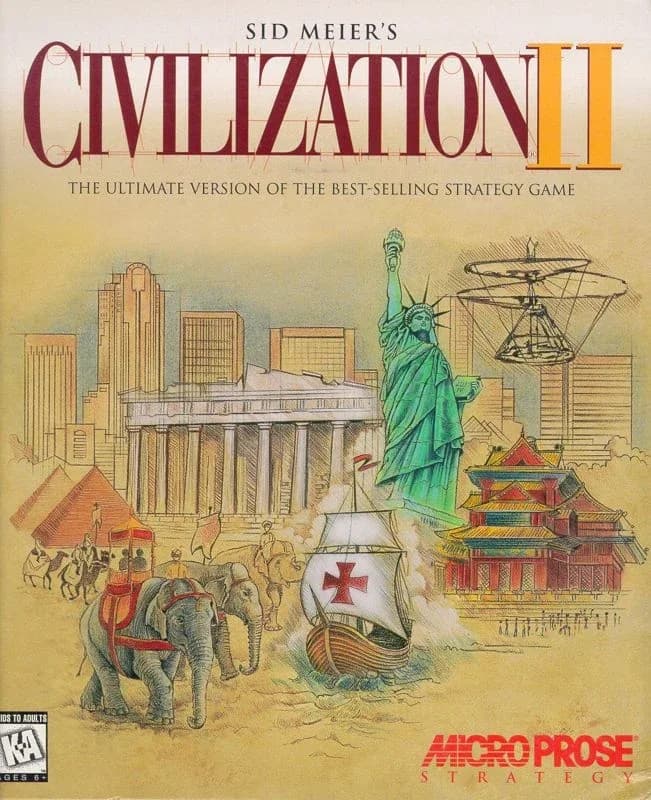
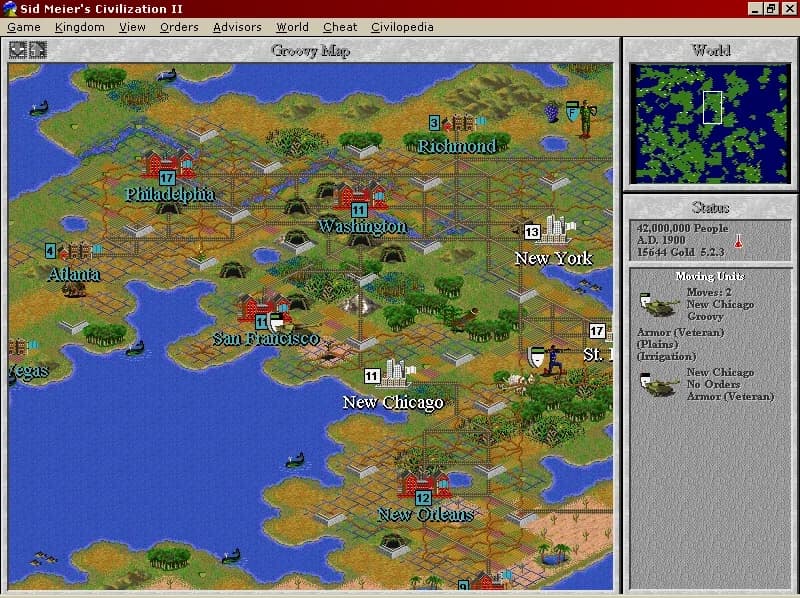
Sid Meier's Civilization II shipped in March 1996, and for a whole generation of players it simply became "Civ." Designed by Brian Reynolds (with Douglas Kaufman and Jeff Briggs), it rebuilt the 1991 original as a native Windows game with an isometric view, redrawn art, and a rebalancing of nearly every system — then layered on a court of live-action advisors who argue with each other about what you should do next.
Sid Meier himself, by then, was credited only for the original design; his role on the sequel was a kickoff brainstorm at his round table. Civilization II is Reynolds' game — and it is widely counted among the best strategy games ever made.
What changed from Civilization
- Combat
- units gained firepower and hitpoints, (mostly) ending the era of phalanxes sinking battleships.
- Scale
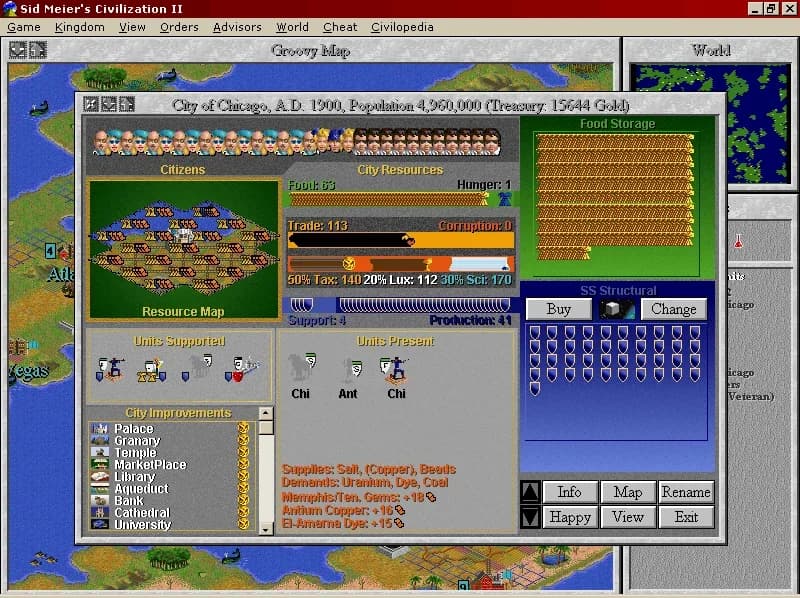
- 21 civilizations (each with a male and a female leader), 51 units, 28 wonders, 89 advances and a sixth difficulty level: Deity.
- Government
- Fundamentalism joined the lineup, trading science for fanatics and unshakable order.
- The High Council
- five full-motion-video advisors whose costumes evolve from Roman senators to the modern day; the Attitude advisor is, famously, an Elvis impersonator.
- The throne room
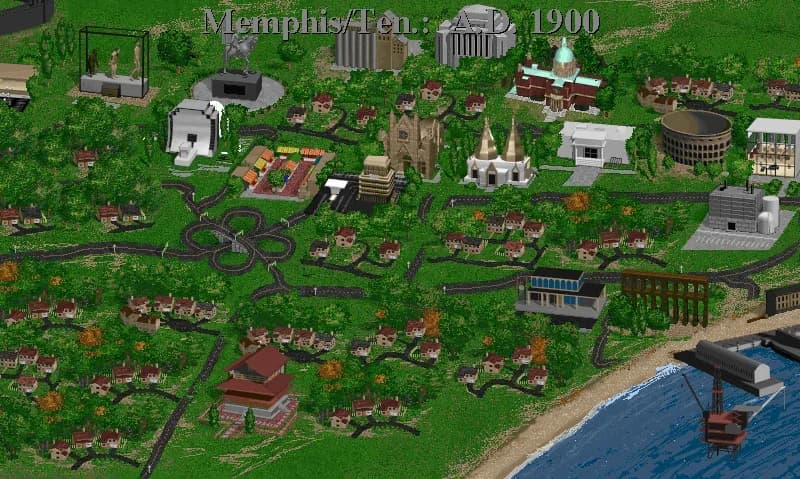
- your palace grows with your reputation, one grateful citizen's gift at a time.
- Wonder movies
- Ken Burns-style documentary shorts for all 28 wonders; Reynolds calls them "the single best audio-visual idea for the entire product."
- Scenarios & modding
- two scenarios in the box (Rise of Rome and World War II), a built-in map editor, self-documented rules.txt and a cheat menu that turned players into designers.
Development: the sequel nobody upstairs believed in
Internally the project was a long shot. MicroProse's management had bet on CivNet, the multiplayer remake of the original; the solo sequel — working title Civilization 2000 — was, in Reynolds' words, a weird idea he and Briggs cooked up, with a lifetime forecast of around 38,000 units. Reynolds wrote the prototype almost single-handedly from a living room in Yorkshire between late 1994 and mid 1995, graph paper spread across the floor, then a team of about seventy finished it in six furious months. The WWII scenario exists because Reynolds was ordered to cut scenarios and "did the exact opposite" — building it in two weeks to prove the feature.
The strength of the modding community is, instead, the very reason the series survived.
Sid Meier, 2021 — on being wrong to fear shipping Civ II's editing tools
Reception: about three million turns of the century
Civilization II topped the US sales chart on release, was GameSpot's highest-rated game at the time (9.2), scored 97% in PC Gamer US (their Game of the Year for 1996) and took Computer Gaming World's Premier Award for Strategy Game of the Year. By 2001, series producer Jeff Briggs put its sales at about three million copies. Its long-tail legend is just as good: a single Civ II game played for ten years became 2012's famous "Eternal War" story, and an MIT/UCL research AI taught itself to win 78% of games — by reading the manual.
Versions, expansions and legacy
- Windows 3.1/95 (March 1996)
- the CD-ROM original, the version emulated here.
- Conflicts in Civilization (1996)
- twenty scenarios, twelve in-house and eight from the community.
- Fantastic Worlds (1997)
- sci-fi and fantasy scenarios plus the editor suite that powered the modding scene.
- Macintosh (August 1997)
- ported by MacSoft; PlayStation (1998 Japan, 1999 West) — published by Activision.
- Multiplayer Gold Edition (1998)
- everything in one box, plus network play; Test of Time (1999) — the engine's multi-map finale.
The team's story has its own sequel: Meier, Briggs and Reynolds left to found Firaxis just after release, where Reynolds' next 4X became Alpha Centauri. Civilization II itself has never been sold on a digital storefront — emulation is genuinely how this classic is played today.
Playing Civilization II today
Play Sid Meier's Civilization II in your browser, no install, with save states synced to your account. The Civilization II encyclopedia has the lot: all 21 civilizations and 42 leaders, 51 units, 89 advances and 28 wonders.